 What is queerbaiting?
Before we get into what queerbaiting is or isn’t, we first need to understand what came before it: queer coding. Queer coding, prominent in media from the Hays Code way up until the 90s, and in some cases even now, is a way in which to subliminally signify that a character is gay without specifically labelling their sexuality. This involves giving a character traits that one would stereotypically associate with being gay. During the Hays Code, this was understandable, as depictions of homosexualiy were banned, but this persisted even through to the 90s, particularly with children’s media. Think of any effeminate or flamboyant Disney villain and you have a queer coded character (hello Ursula the Sea Witch aka Divine!) Queer coded characters have their own issues: them all being villains or joke characters is more than a little problematic, but that’s not what I’m wanting to discuss here.
So how does this differ from queerbaiting? Simply put, the so called ‘pink pound’ (or dollar or whatever your currency is.) With increased LGBT+ rights comes an increased recognition that the LGBT+ community is a large and valuable consumer base. As we see from queer coding, LGBT+ audiences are starved of representations of themselves on screen, and often flock to media that depicts their experiences. And now it’s important to define what queerbaiting is now. Queerbaiting is not including queer characters in your movie or TV show. It is not even creators cynically including queer characters in the hope of attracting the LGBT+ audience. No, queerbaiting is when creators specifically exploit the queer community’s desire for representation, and fail to deliver the goods.
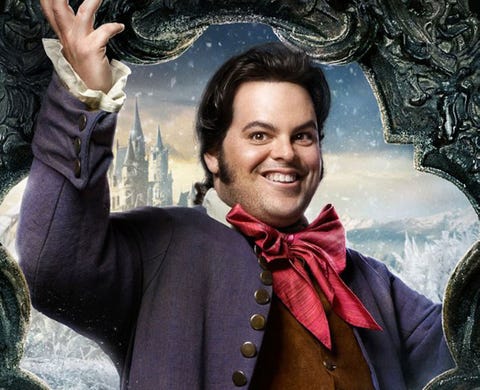 Some examples, then. Probably one of the most prominent in recent times has been LeFou in the live-action remake of Beauty and the Beast. A huge media storm surrounded Disney’s promise of their first explicitly gay character in LeFou. What did audiences get? A literal blink-and-you-miss-it shot of Josh Gad dancing with a male soldier. (And let’s not get started on the fact that LeFou is a villain.)
Television is my primary concern and also the source of most of my examples. Queerbaiting on television can take a couple of forms. It could be promoting Riverdale with the image of Betty and Veronica kissing, only for the episode to reveal it to be a stunt and that both characters are heterosexual. Or it can go the other way, knowingly framing a relationship between characters as something more, teasing audiences with it to establish a large fanbase, and never following through. This is Destiel in Supernatural; this is Sterek in Teen Wolf; this is Rizzoli and Isles, Kara and Lena in Supergirl, and a legion of other shows. Teen Wolf is the one that confuses me the most. In a show by a gay showrunner, with a number of LGBT+ characters (Danny, Ethan, Jackson, Caitlin etc.), the teasing of a relationship between Stiles Stilinski and Derek Hale seems especially mean-spirited. A promotional video featuring actors Dylan O’Brien and Tyler Hoechlin cuddling and campaigning for an audience-voted award may have been exciting for fans when they believed that Sterek stood a chance, but now leaves a bad taste in the mouth.

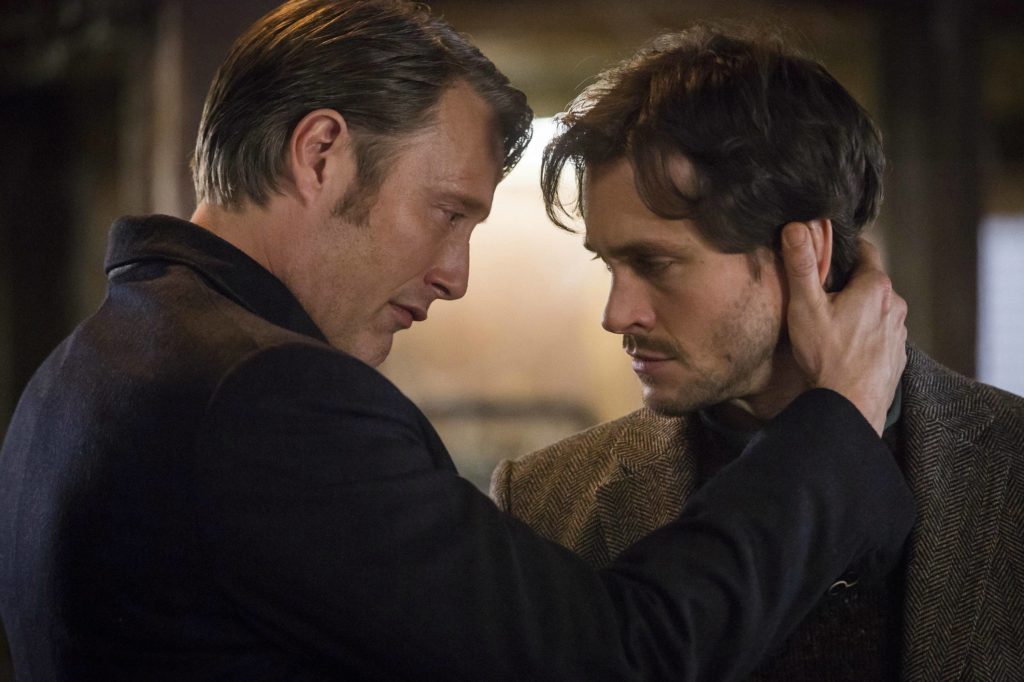
These thoughts came to me when I was discussing Hannibal at a conference, and somebody asked me if I thought Hannibal was queerbaiting. I have to say no. On a base level, one might argue that never having Hannibal Lecter and Will Graham kiss has queerbaited an audience invested in their ‘romance’. The difference is, Hannigram is a queer relationship. To quote Will and Bedelia: “Is Hannibal in love with me?” “Yes, but do you ache for him?” This is not some sly nod to the audience to string them along for another few episodes. It is one of many explicit declarations of love throughout the series. An intimate, queer relationship absent a physical or sexual element is still an intimate queer relationship. As as much as I shamelessly want to see Hugh Dancy and Mads Mikkelsen make out, a kiss would have cheapened what is one of the most intense and effective queer relationships in contemporary television.